What Makes Steel Pipe Piles Work in Urban Foundation Projects Where Other Pile Types Can't
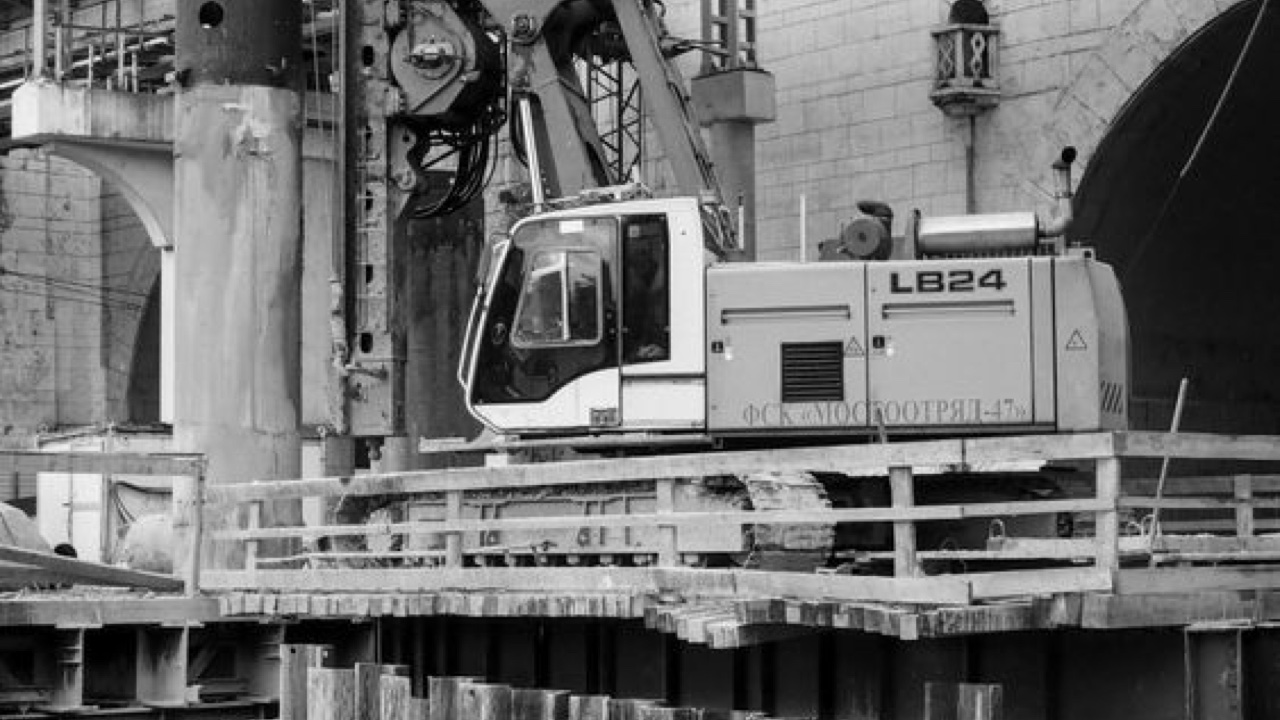
Foundation engineering in cities operates under a completely different set of constraints than foundation engineering in open terrain. The geotechnical problem — getting load into the ground reliably — is the same. Everything surrounding that problem is different.
Space is limited. Adjacent buildings are close enough that ground vibration from pile driving can cause cracking, settlement, or structural damage. Noise ordinances restrict working hours and sometimes prohibit impact hammers entirely within certain distances of residential buildings. Underground utilities run through the zone where the pile rig needs to operate. The ground itself is often a complex layer of historic fill, buried rubble, old footings, and variable soft deposits left by a century of urban development.
Steel pipe piles adapted to these constraints more successfully than most alternatives. Understanding why requires looking at each constraint and how different pile systems respond to it.
The Noise and Vibration Problem
Impact pile driving — dropping a hammer on top of a pile — is efficient and well-understood, but it generates both airborne noise and ground-borne vibration. In open construction sites away from occupied buildings, this is a manageable nuisance. In cities, it becomes a genuine constraint that shapes what pile systems are feasible.
The vibration that travels through the ground during impact driving can affect adjacent structures in two ways. Dynamic vibration during driving is felt as shaking; the concern is whether it causes plaster cracking, disturbs sensitive equipment, or alarms building occupants. Settlement-induced distortion occurs when vibration causes loose granular soils to densify, reducing their volume and causing the surface and anything supported by it to settle. The second mechanism is more consequential and harder to predict without detailed site-specific analysis.
Steel pipe piles address this through two installation methods that substantially reduce or eliminate vibration. Hydraulic press-in installation — where a machine grips previously-installed piles and uses their resistance as a reaction to press new piles into the ground — generates almost no vibration. The pile is pushed rather than driven; the insertion force is continuous rather than impulsive. Press-in equipment is available for steel pipe piles from roughly 300mm to 800mm diameter, covering the range needed for most urban building foundations.
Auger-assisted installation drills a hole in advance of or concurrently with the pipe pile, reducing the soil resistance that the pile needs to overcome. This eliminates the need for high driving energy and reduces both vibration and noise. It works particularly well in urban fill layers where buried obstructions would deflect or damage a driven pile.
Both methods sacrifice some of the efficiency of impact driving and require more specialized equipment, which increases cost. In cities where impact driving is prohibited or severely restricted, they aren’t alternatives — they’re the only options.
Restricted Working Space
Urban construction sites are often tightly bounded by property lines, existing structures, and temporary hoarding. The equipment footprint matters: a pile rig that needs forty meters of clear space behind it to lift leaders into position simply doesn’t work on a 15-meter-wide urban site.
Steel pipe piles can be installed with leader-mounted equipment in relatively short sections that are spliced by welding as the pile advances into the ground. Rather than arriving as a single 20-meter pile that requires a tall crane to handle and position, the pile starts as a 3-meter or 6-meter working section and additional sections are welded on at ground level as the pile descends. This approach reduces the vertical clearance required and allows installation in buildings with limited headroom — underground structures, basement levels, and constrained urban sites where a conventional pile rig’s mast would be obstructed.
The welding requirement introduces a quality control consideration: each field splice must achieve adequate structural performance, and the weld must be executed properly in whatever conditions exist at the time of installation. This requires qualified welders and inspection — not just the convenience of a threaded splice or a bolted connection. For steel pipe piles for foundation projects in urban environments where the piles are primary structural elements, weld quality matters.
Underground Utilities and Buried Obstructions
Urban ground contains decades of buried infrastructure: water mains, sewers, gas lines, electrical conduits, telecommunications cables, old foundations, timber piles from previous buildings, and rubble fill of uncertain composition. Navigating this environment without damaging existing services and without the pile deflecting off an obstruction requires both planning and pile system flexibility.
Steel pipe piles can be installed with a cutting shoe — a hardened steel tip designed to cut through or displace soft obstructions — or with a soil displacement auger that cores through harder materials. When an obstruction is encountered that can’t be cut through, the open-ended steel pipe can be partially excavated from inside with a small clamshell or auger to allow penetration. This is slower and more expensive than unobstructed driving, but it allows the pile to reach its design depth despite encountering buried material that would stop or deflect other pile types.
Pre-drilling through known obstruction layers is also straightforward with steel pipe piles: drill the obstruction zone with a casing that matches or slightly exceeds the pile diameter, then set the pile through the pre-drilled hole and drive or press it to depth below. The steel pile’s wall stiffness means it maintains its position and geometry through the pre-drilled zone without requiring the continuous casing support that softer pile types would need.
Variable Soft Urban Fill
The soil profile under most city centers reflects the site’s history: natural soil overlaid by historical fill, regrading, basement excavation backfill, demolition debris, and sometimes organic material from buried rivers or former marshland. This variable profile creates difficulties for pile design because the load-transfer mechanism changes depending on what the pile passes through and what it bears on.
Steel pipe piles tolerate this variability better than cast-in-place concrete alternatives because they arrive at the site with defined material properties. An ASTM A252 Grade 3 pile has a known yield strength that doesn’t depend on how the concrete was mixed, poured, or cured. The pile’s section properties can be calculated with confidence and don’t vary based on site conditions during installation.
The pile also provides its own casing through soft layers. Where cast-in-place concrete piles require that the hole stay open or be temporarily cased during concrete placement — which can be difficult in running sand or soft clay under groundwater pressure — the steel pipe maintains its shape and excludes soil and water from the interior. The pile is structurally complete when it reaches bearing depth, independent of what soil conditions exist above.
Retrofitting Existing Structures
Urban foundation work isn’t always for new buildings. Existing structures need foundation strengthening when loads increase due to building additions, when adjacent excavation reduces lateral support, when soil settlement requires underpinning, or when seismic upgrade requirements expose deficiencies in the original foundation.
Steel pipe piles are among the few pile types that can be installed under existing buildings in underpinning applications. Hydraulic press-in equipment operates within the building footprint, using the weight of the building itself as reaction for the installation force. Working sections small enough to be handled within a basement space — typically 1.5 to 3 meters — are spliced as the pile descends. The pile is connected to the existing footing with a transfer bracket, and load is gradually shifted from the original footing to the new pile.
This application requires piles with consistent material properties and reliable weld splice performance, since the pile is installed in segments under load conditions that don’t permit easy verification of the final product. The material certainty that comes from mill-certified ASTM A252 pipe is directly relevant here: the foundation engineer needs to rely on the specified yield strength and wall thickness without the ability to field-test the installed pile in a way that would be practical for a test pile in open ground.
Urban foundation engineering is fundamentally about solving problems that open-site foundation engineering doesn’t encounter. Steel pipe piles didn’t become the default solution for constrained urban projects because they’re cheap or because the industry settled on a convention. They became the default because the combination of installation method flexibility, structural reliability, and adaptability to difficult conditions made them consistently the most workable choice when the site itself is the hardest part of the problem.